This is Part 2 of Meta Ads, the operator's way, the free playbook. Every platform claim below was checked against Meta's own help pages in September 2026.
> Your competitors are showing you, publicly and for free, which ads are making them money. Almost nobody looks.
Free, public, no login required
Meta Ad Library
Every ad running on Facebook and Instagram is listed in Meta's Ad Library at facebook.com/ads/library. You can see any business's active ads — the creative, the copy, where it links, and most importantly, the date each ad started running.
- Open Meta Ad Library — Set your country and choose All ads.
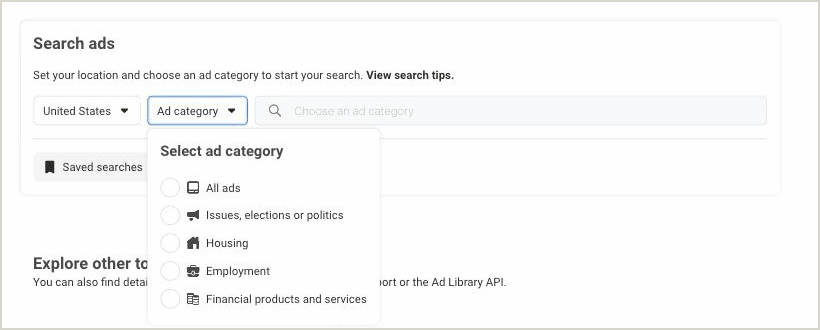
Choose All ads under Ad category
- Search your competitor — Type their name and pick them from the Advertisers list. Don't just press enter — a keyword search returns every ad that mentions the words, including unrelated businesses.
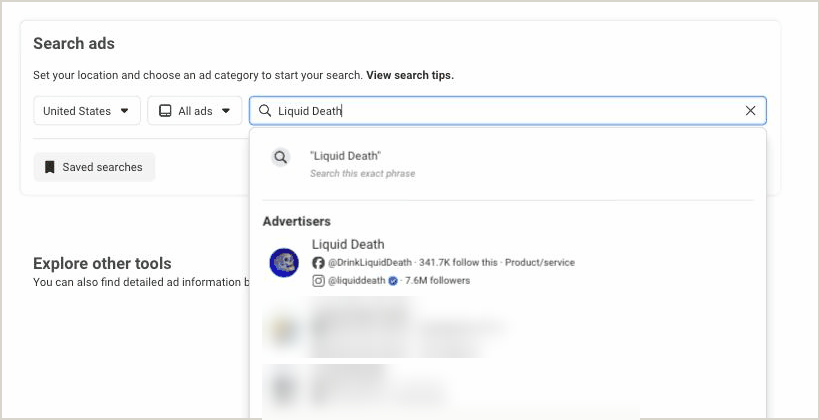
Pick the business from Advertisers, not the keyword line
- Scroll their active ads — This is everything they're paying to show right now.
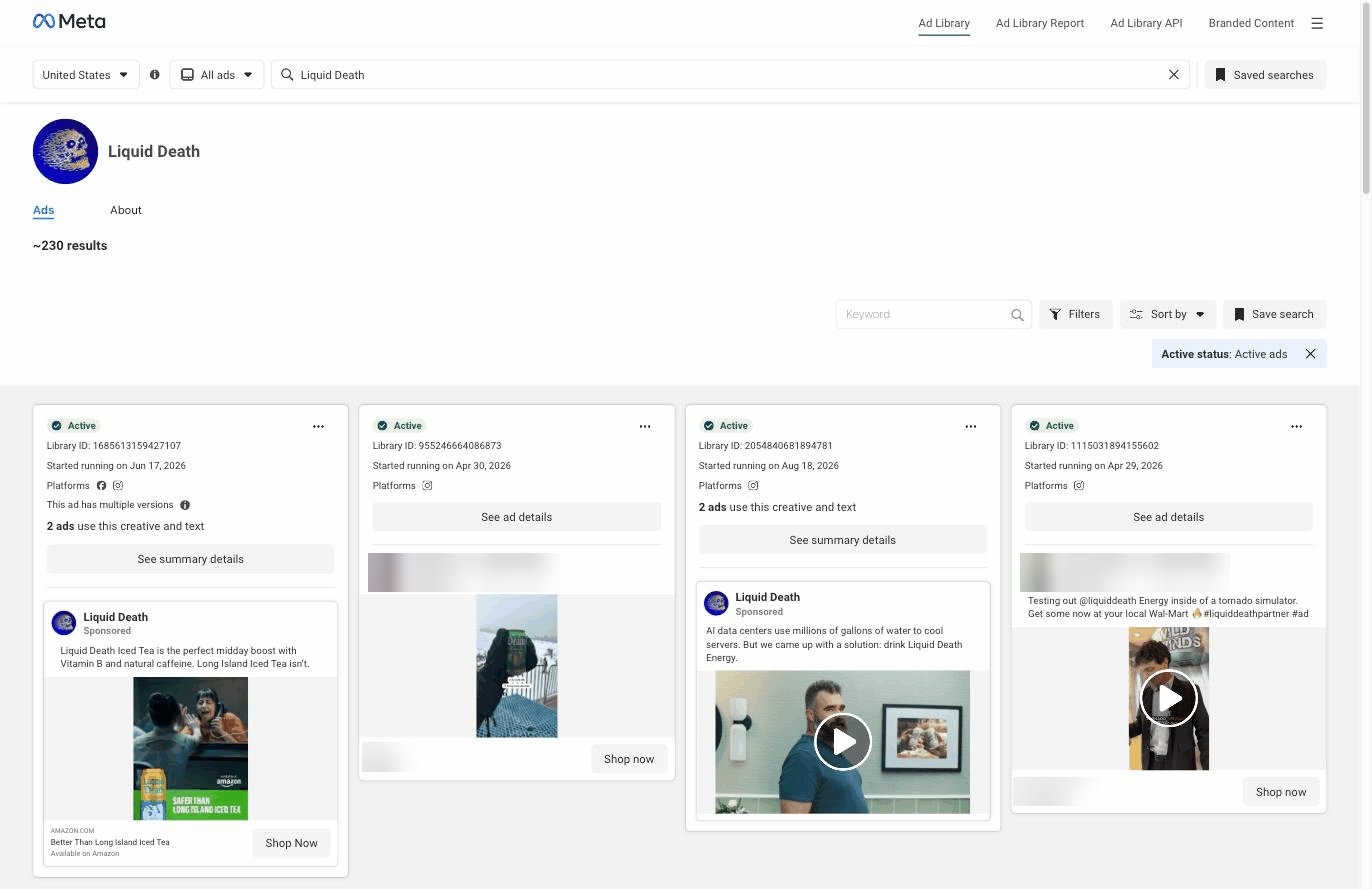
The advertiser's page: every active ad, with a result count
- Find what's still running — Look for two things on each card: an old Started running on date, and multiple versions of the same creative.
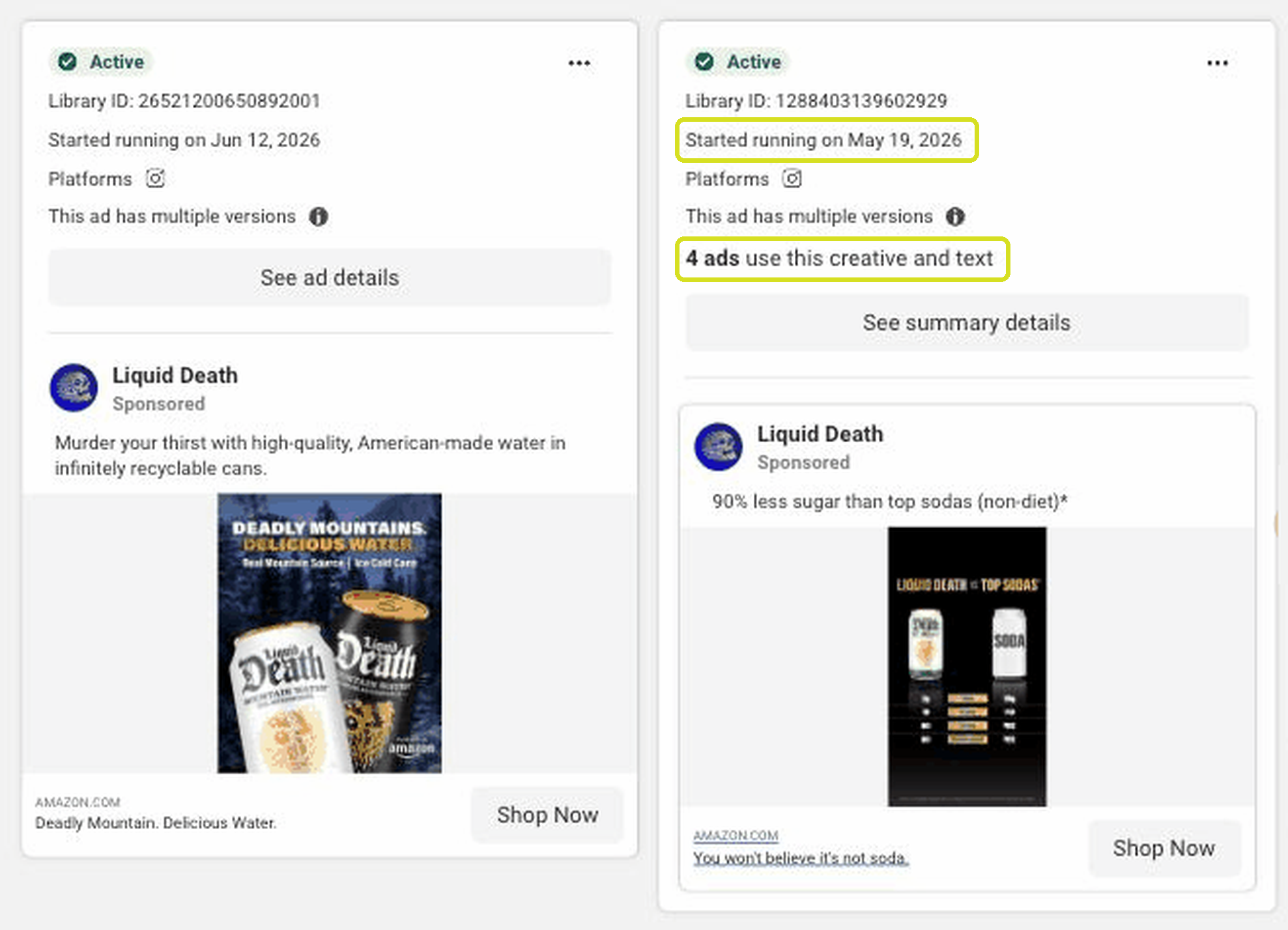
What a winner looks like: an old start date, and several versions live
Nobody keeps paying for an ad that isn't working
The insight
That's the whole trick. A business that watches its numbers kills a losing ad fast. So an ad that has been running for three or four months is very likely paying for itself. And if they've made several versions of it, they're scaling it — that's their winner.
It's a signal, not a guarantee: some big brands run awareness ads that were never meant to pay for themselves directly. That's why you look for both marks — a long run and multiple versions.
Which means it needs to become your winner. Not the ad itself. The thing that makes it work.
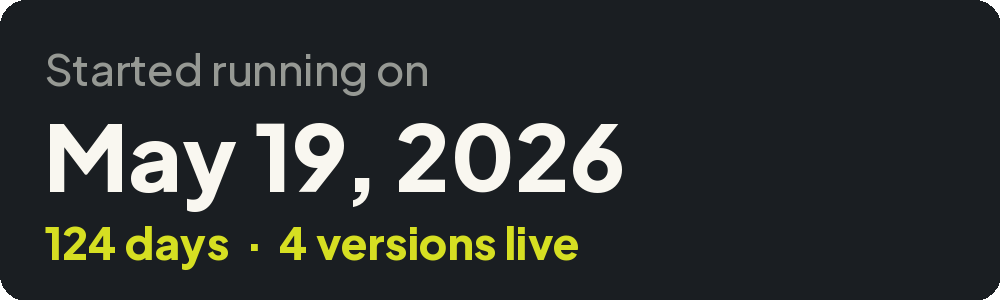
The two lines that tell you it's a winner (as captured September 20, 2026)
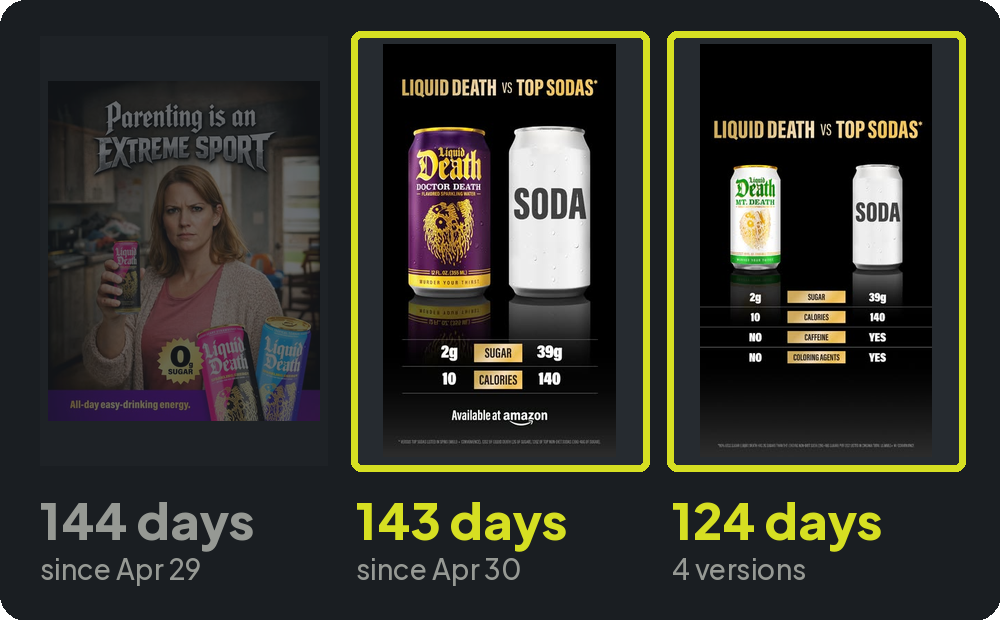
Ranked by days running: the two long-runners share one format
Not copy and paste
Copy with taste
Copying a competitor's ad is lazy, it looks cheap, and it usually doesn't work — their audience already knows them, and yours doesn't. What transfers is the structure. For each long-running ad, write down:
| Look for | Ask yourself |
|---|---|
| The enemy | What are they positioning against? A category, a habit, a competitor? |
| The proof | What makes the claim believable — numbers, a demo, a comparison, a customer? |
| The format | Static, video, carousel? Comparison table, founder to camera, UGC? |
| The offer | What exactly are they asking people to do, and what do they get? |
| The landing page | Where does the click go, and what does that page do first? |
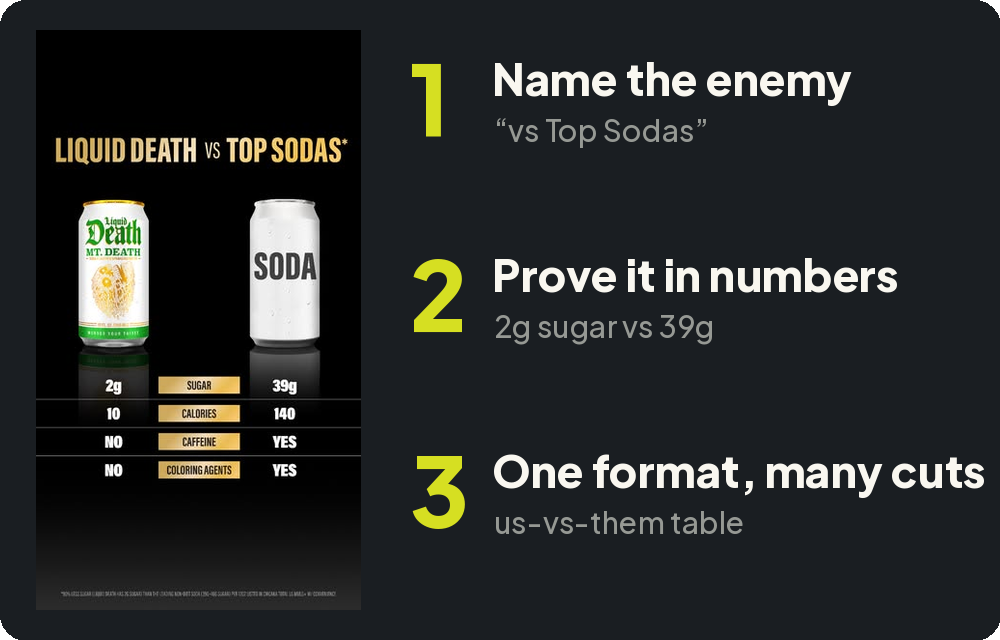
One winning ad, taken apart: steal the structure, not the ad
Same structure, your facts
Make it yours
Now rebuild it with your own material. Keep the five notes; replace every detail with something true about your business. Say you run a meal-prep delivery service, and you've just taken that soda ad apart:
| Their ad | Your version | |
|---|---|---|
| The enemy | Top sodas | Takeout |
| The proof | 2g of sugar vs. 39g | $9 a meal vs. $18 · 45g of protein vs. 22g |
| The format | An us-vs-them table, one static image | The same table — your numbers, your photo |
| The offer | Shop now, on Amazon | First week half off |
| The landing page | Amazon | Your menu, with the same comparison at the top |
Same skeleton, nothing copied. Their photos, their wording, their trademarks and their claims stay theirs. The structure is the only thing you take — and every number in your version has to be true, and yours.
- Make two or three versions, not one. — They're running four versions of one format for a reason. Keep the structure and change one thing per version — the enemy, the proof point or the first line — so you'll know what made the difference. How many you can afford to test is arithmetic: Part 5.
- Let AI draft. You decide. — Give Claude, ChatGPT or Gemini your five notes and the true facts about your business, and ask for ten variations in your voice. Use an image tool such as Gemini or Higgsfield to mock up the layout around your own photos. Two rules: AI never invents a number, and you choose what goes live.
- Run it as a real test. — One thing different per version, a decision rule written down before launch, nothing edited mid-flight. Part 7 has the test checklist; Part 6 is the setup.
> Make it a habit. Looking once is interesting. Looking every week is an advantage. Keep a simple board — competitor, ad, start date, versions, what the structure is — and check it weekly. When a new ad appears and is still running a month later, you've just been handed a tested idea.
Get it as a PDF
The guide above is Part 2 of the playbook. Both files — this part on its own, and the full 31-page Meta Ads, the operator's way it comes from — are free: get them here.